

Word Becomes World
Poems and spoken-word pieces about language, attention, longing, consciousness, comedy, and the sacred. The title poem begins from a simple fact: the words we choose become part of the world we share.
Long before today’s conversational agents, I was building their quiet ancestors: systems that read between the lines, inferred feeling without emotion words, turned stories into code, and modeled a person’s point of view.
Poems and spoken-word pieces about language, attention, longing, consciousness, comedy, and the sacred. The title poem begins from a simple fact: the words we choose become part of the world we share.
A father-and-son English rendering of Laozi’s classic of the Way. We read the Wang Bi text alongside the Mawangdui silk and Guodian bamboo manuscripts, working to make all eighty-one chapters clear on first reading without sanding away their mystery.
Carter Cleveland on the work that entered Artsy through ArtAdvisor, the art-market intelligence company Hugo built with Lucas Zwirner.
Writer and conference organizer Antonia Allegra, remembering Hugo’s TASTE³ talk about language, food, and the Synesthetic Cookbook.
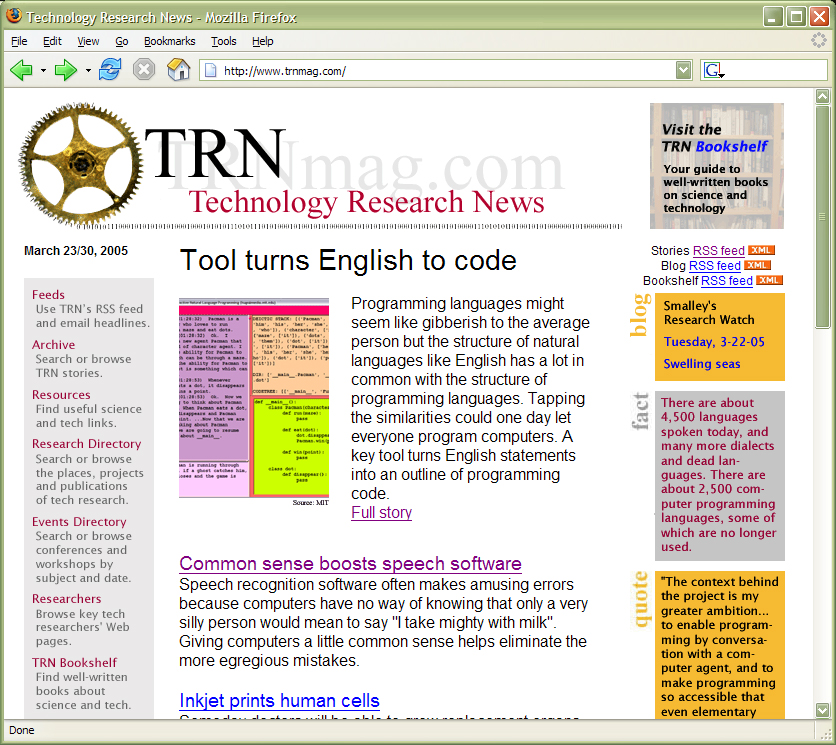
Hugo explaining Metafor, a research system that treated an ordinary story as the beginning of a program.
The 2003 paper showed how common-sense knowledge could find an unstated feeling in ordinary language; the award recognized its lasting influence.
The Synesthetic Cookbook let people search food by sensation and emotion, earning a place in the magazine’s annual ideas issue.
An audience response to Mapping Consumer Tastes, Hugo’s keynote at Webbdagarna in Stockholm.
Chris Dixon remembering the first encounter that eventually brought Hugo to Hunch.
Caterina Fake introducing Hugo’s essay on small happiness, taste, and computational aesthetics.