language before the laboratory
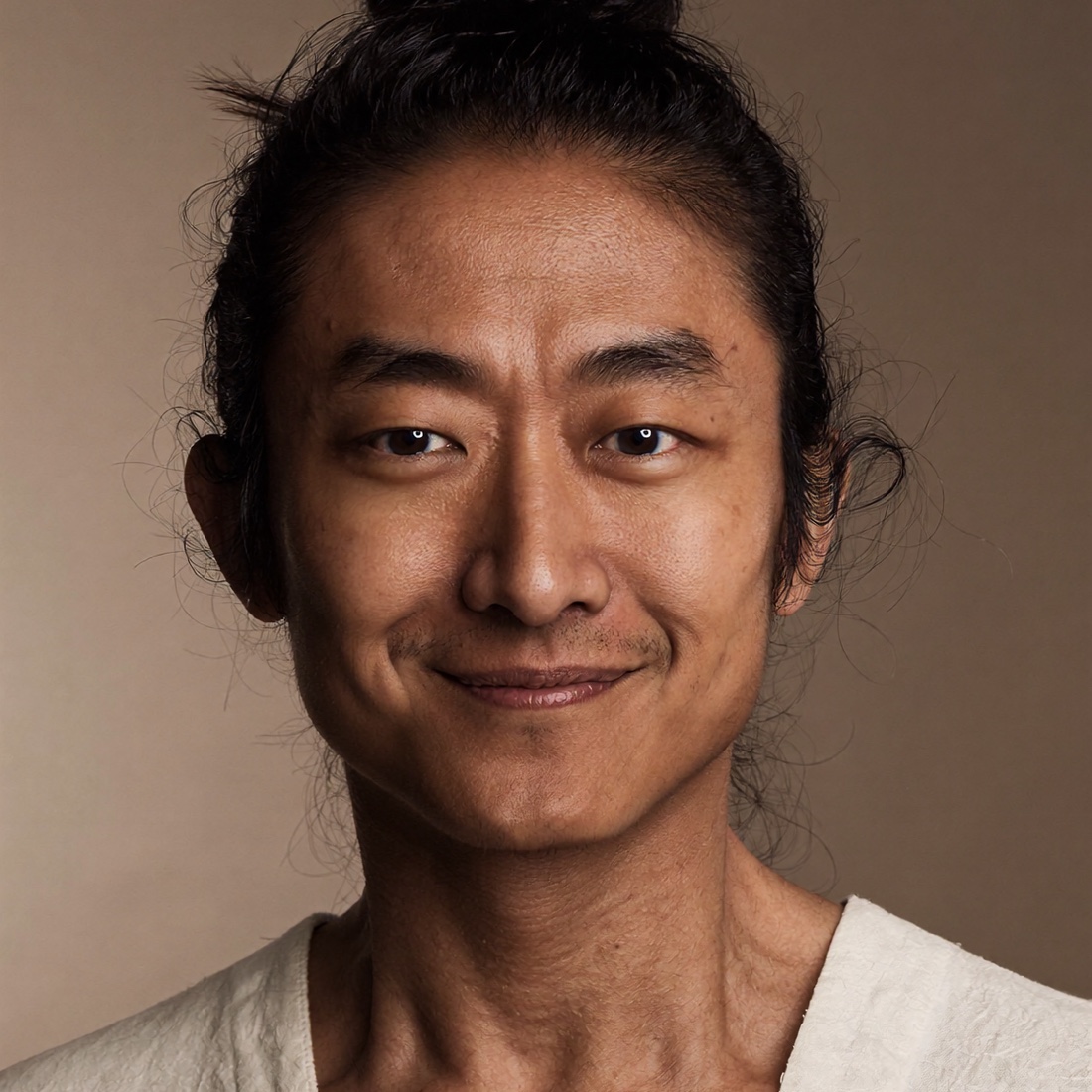
I was born 刘新雨 — Liu Xinyu, new rain. In Chinese, the sound of Xinyu can also suggest 新语, new language, and 心语, heart language. That openness is part of what I love about words. In my own reading, the modern form of Liu, 刘, holds writing beside a blade: guardian of the word.
I came to the United States at six. I remember a long interval in which my Chinese had receded and English had not yet become mine. Memories from then feel loose and sensory, less fastened to words. That passage left me attentive to what language makes possible, and to what remains present when language is missing.
As a teenager in Arcadia, California, science gave me another language. I captained the Science Bowl team; our coach’s note from that spring reads “fifth in the nation.” One of the coaches, Wayne Lee, was a Mars mission planner at the Jet Propulsion Laboratory, and in the summer of 1997, when I was seventeen, he opened the door to my first job there: public relations during the Mars Pathfinder landing. I watched through the glass into mission control as Sojourner reached Mars. It was my first experience of a technical achievement becoming a public story. That afternoon began a lifelong fascination with stars and alignment, and I made myself a quiet promise: that one day I’d build a better system of astrology. Twenty-seven years later it has a name, Quintessence.
Two summers later, in IBM’s cryptography group, I audited a security product by reading its code and interviewing its programmers, and wrote down the architectural flaws instead of a reassurance. At BCL Technologies I built an early spoken-language interface, and a meeting manager that went from a napkin to a working prototype in about two months.
the quiet ancestors
At MIT I studied electrical engineering, computer science, and Media Arts and Sciences. I pledged Chi Phi and came to run the house; the fraternity was founded in 1824, the oldest men’s college social fraternity in America. More important than the degree names was the inheritance of questions. With Push Singh and in Marvin Minsky’s orbit, I worked on the ordinary knowledge people rarely say aloud. With Henry Lieberman, I explored software agents and the idea that a story already contains the objects and actions of a program. With Ted Selker, I worked on systems that read feeling and context. My doctoral adviser, Pattie Maes, had helped open collaborative filtering: learning what one person may love from patterns among people.
In the fall of 2006, the year I finished my doctorate, I co-taught a seminar at MIT with the philosopher Irving Singer. It was called Feeling and Imagination in Art, Science & Technology, after his book. The syllabus reads I. Singer & H. Liu. I was in my twenties. We read him beside Minsky’s The Emotion Machine, Plato, Kant, the Dao De Jing, Bergson on laughter. Students wrote a page a week. Twenty years later, feeling and imagination are the whole question. Machines can think, so we have to feel. Machines can do anything, so the poverty now is imagination. We have to teach people to imagine better.
I spent those years trying to make machines better companions to human thought. The work gave software pieces of common sense, feeling, context, memory, and taste. One system could find the fear inside “I was in a car accident” without needing the word fear; another could read an English story as the beginning of a program. My dissertation asked whether a machine could recover not only a person’s ratings, but the point of view that produced them.
In Social Network Profiles as Taste Performances, I treated a MySpace profile not merely as a node in a friend graph, but as a person’s public composition of self. I combined close reading with computational analysis to study how people make identity from what they love. The idea underneath it feels more current now: an online profile is not a neutral record of preference. It is a performance made from taste.
These were not language models in the current sense. They were quieter, smaller systems with explicit machinery and visible limits. They are among the quiet ancestors of today’s AI. The papers preserve the names, methods, and results.
taste leaves the laboratory
I built Hunch with Chris Dixon and Caterina Fake, as its Chief Scientist. Hunch took the taste research into a consumer product: answer a small set of questions and the system could learn a portable profile of what you might prefer across very different domains. eBay acquired the company in 2011, and I continued there as a principal scientist, working with taste and brand data at a larger scale.
With neuroaesthetics researcher Nancy Etcoff, I created Hedonometrics to explore the neuroscience of happiness: how happiness and aesthetic experience show up in brains, stories, products, and public spaces. We worked quietly with a few remarkable clients. For the City of Santa Monica, we created Positivity Pulse, a prototype for reading the emotional weather of shared spaces. Some of the work remains confidential, as it should.
I later built ArtAdvisor with Lucas Zwirner to help people see the cultural context around art, not only what resembled what. Artsy acquired it in 2017, and I spent four years there as Chief Scientist, working where taste, cultural value, and machine learning meet.
the question becomes a practice
How should a life be lived? was already the governing question in my early notebooks. For years I approached it through aesthetics, philosophy, and computational models of what people notice and love. Beginning in 2016, meditation, service, and devotion joined the daily writing, which had begun in the notebooks on 1 December 2004, as ways to test an idea in the life that held it. The lines that stood alone are in the sayings.
the return to word
Language returned first through the name. My friend Mavi read The Star for me and said, “You are Star.” I took the full name Star Heartsong in 2020. It marked a return to language not only as an object of research, but as a way of living.
It also returned through poetry and through a new English rendering of Laozi with my father, Toming Jun Liu. The work asks for something I also want from software: language clear enough to enter, and deep enough to keep unfolding.
the work now as of September 2026
Today I am deep in AI research again. Questions from my earlier work—how machines read between the lines, understand a point of view, and turn language into action—have become newly practical. Much of what looked like history now feels like unfinished work.
Alongside the research, I am making new work in language, naming, and cosmology. Some of it is not ready to explain yet.
This site is the living record: research, poems, current projects, talks, and the public record. Start wherever something catches light.
If we have just met, the short, checkable version gathers the work, the dates, and the receipts in one place.